The Telephone as an Agent Interface
A familiar physical ritual became a deterministic interface for voice agents—and a doorway into an independent letter-writing product.
- My role
- Product definition and end-to-end integration across device, voice session, and web experience
- Question
- A voice model inside an old telephone is not yet a legible product; the physical actions, agent states, and product boundaries must agree.
- Topics
- voice interfaces · embedded systems · product design
Context
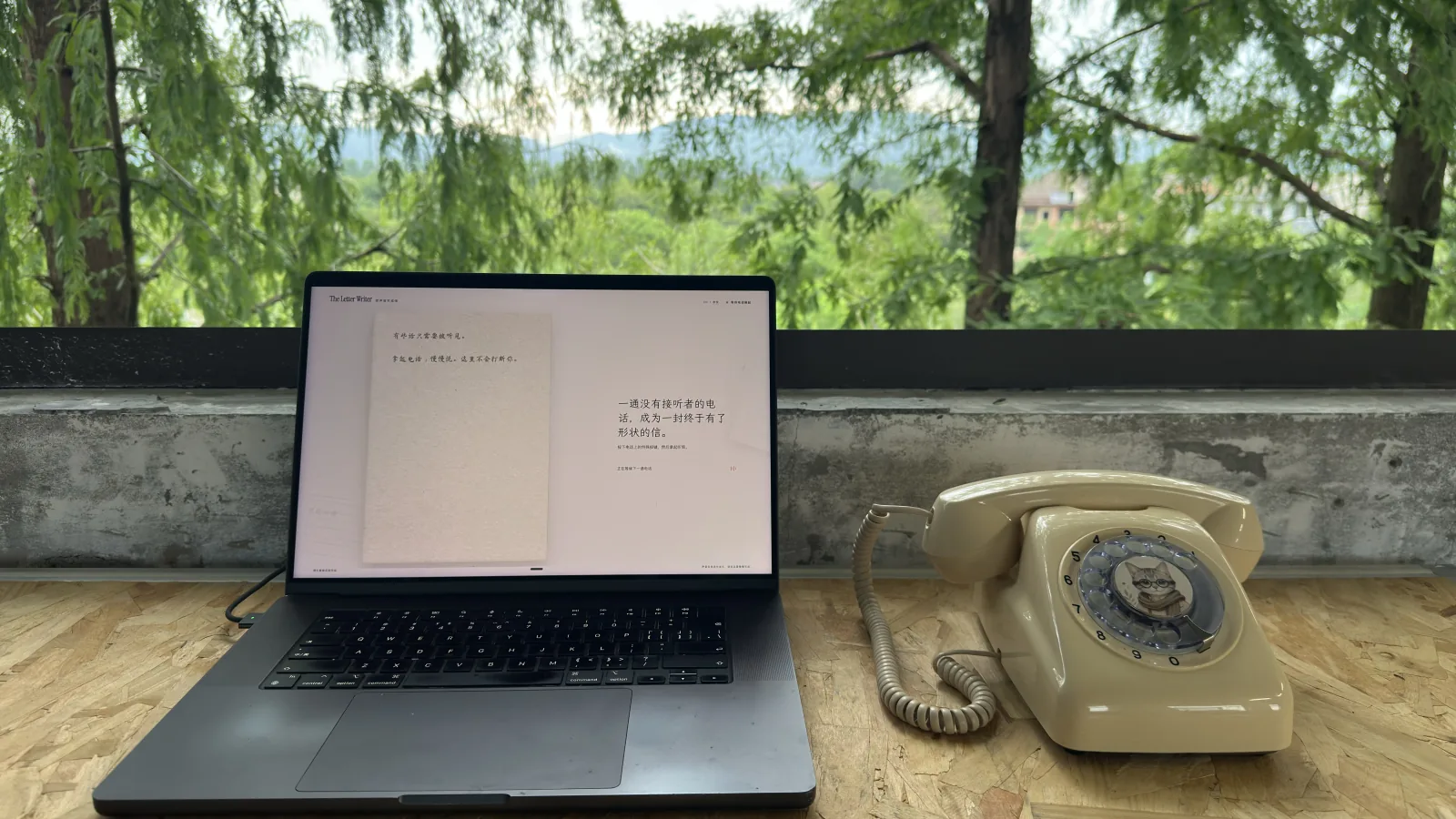
Old telephones already contain a compact interaction language: ring, pick up, dial, speak, and hang up. MemoMate Telephone explored whether that familiar sequence could become an interface for agent behavior without turning the object into a generic voice-assistant demo.
The Letter Writer introduced a more specific experience: speak or write, review the result, seal it, and wait. Its meaning depends on asynchronous communication and ritual, not on the telephone itself.
My responsibility
I was responsible for the interaction contract across both projects. On the telephone side, that meant preserving recognizable physical actions while making mode selection and device state deterministic. On The Letter Writer side, it meant carrying a one-time voice session into a focused web experience while keeping the product independent from the phone and the voice infrastructure.
The responsibility was integration and boundary-setting, not pretending every dependency belonged to one product.
Hard decision / tradeoff
The central decision was to let the telephone be an input without letting it define The Letter Writer.
It would have been simpler to present letter writing as another telephone mode. That would also have made the current integration look more complete than the product really is. Instead, the phone remains a replaceable entry point, and The Letter Writer owns the letter, review, sealing, future reply relationship, and long-term data decisions.
A second honesty constraint followed from that boundary: the current “send” action seals a page. It does not deliver a letter to a real recipient, and the interface must not imply that it does.
Artifact
MemoMate Telephone preserves the physical vocabulary of the original object while exposing explicit agent modes. One mode opens an AI conversation; another starts a single Letter Writer session.
The integrated Letter Writer slice receives that voice session, writes the transcript onto letter paper in real time, supports review of the original and a faithful transcription, and completes a page-level sealing ritual. The web product, device firmware, and voice-session provider remain separate systems with explicit responsibilities.
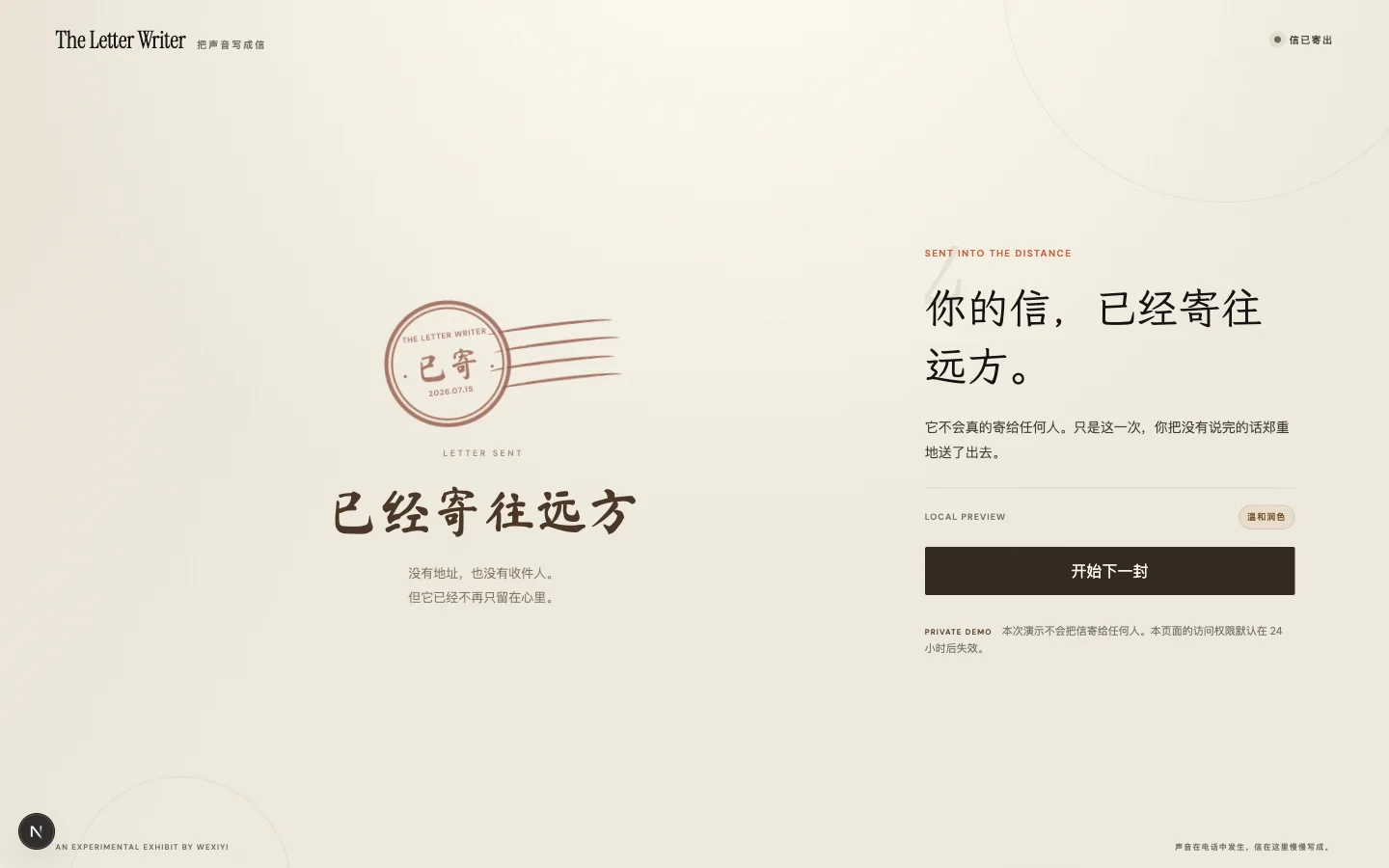
The first public-safe end state: sealing is complete, but the interface does not claim that a real recipient received the letter.
Evidence
- The distinct telephone modes passed real-device interaction checks, including cold-start and software-update regression.
- The first deployed Letter Writer slice completes the voice-to-letter flow from an explicit session through review and page sealing.
- The current product contract names the telephone and voice service as replaceable dependencies.
- The same contract records what is absent: real delivery, a recipient and reply relationship, independent accounts, and a product-owned data layer.
What changed
The telephone changed from a nostalgic shell around open-ended voice chat into an explicit selection surface for different agent-shaped experiences.
The Letter Writer also changed category. It is no longer defined as a feature of MemoMate Telephone. It is an independent product whose current telephone integration demonstrates one input path, while its core interaction and future direction remain owned by the letter experience.
Current status
Active. The two telephone modes and the first integrated voice-to-letter slice are working and have been validated end to end. The current “send” action is still a page-sealing ritual. Real delivery, replies, independent input, accounts, and a product-owned data layer have not been implemented.